|
|
|
Road Safety Week
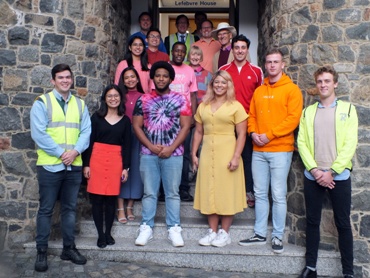
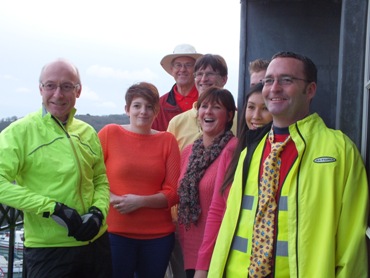
Bright Day 2020 - Friday 23rd October Several companies took part in "Bright Day" - the day when we promote
our BE SAFE BE SEEN message by asking islanders to dress up in bright clothes and donate a sum of
money. We then spend the proceeds on hi-vis vests which we give out free during Road
Safety Week. Guernsey's roads have limited lighting and so it is really important that
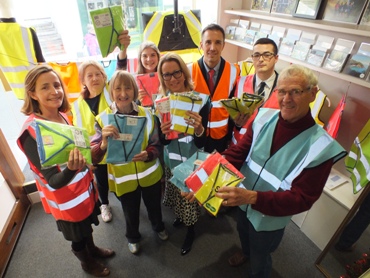
pedestrians and cyclists wear hi-vis items in order to be visible after dark. Grant Thornton staff were featured in the
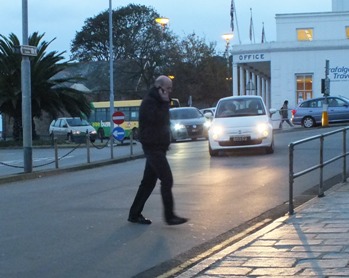
Guernsey Press. Keeping safe on the roads after dark Guernsey's roads are so dark at night that it is essential that pedestrians not only brighten up by wearing a
high visibility vest over their dark coat or jacket, but also follow the Highway Code rules for pedestrians. This means
when there isn't a footpath, walking on the right hand side of the road facing the traffic. The only exception is
when you come to a blind bend. You should then cross over the road carefully and then cross back again after the bend.
The leaflet has been provided by us to help you keep safe on the roads. click here to download our safe walking leaflet
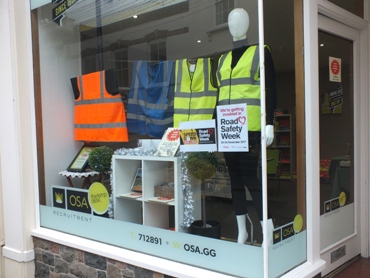
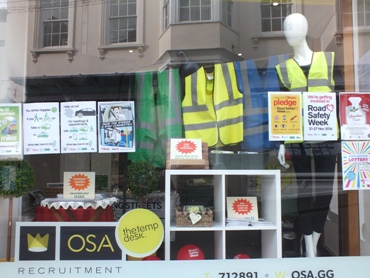
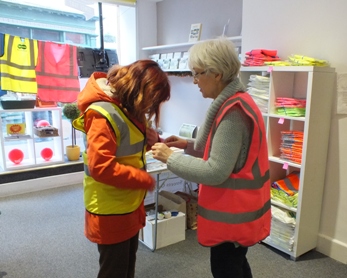
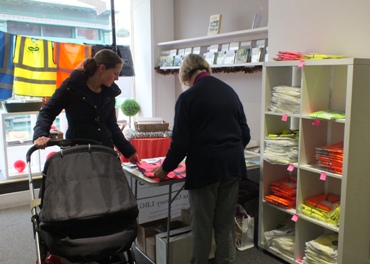
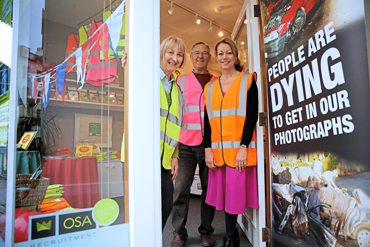
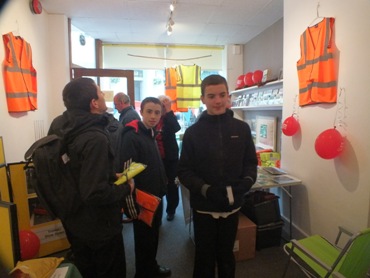
Pop Up Shop 2019 We spent 5 days in the OSA Recruitment
Pop Up Shop giving out 735 hi-vis vests to members of the public + over a hundred children's vests donated by Specsavers.
Groups that benefitted were Elizabeth College, Scouts and Sea scouts. We also sold a great number of our cards and calendars
and received a donation of £200 from Lloyds Bank. We hope that everyone will brighten up at night in order to
keep safe on our dark roads.
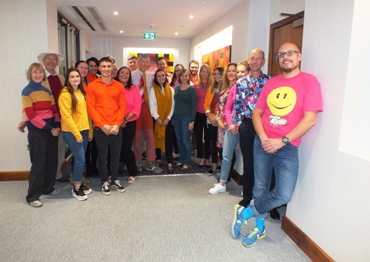
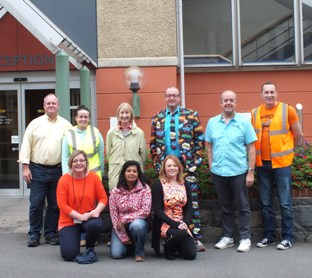
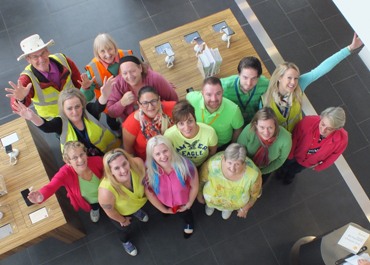
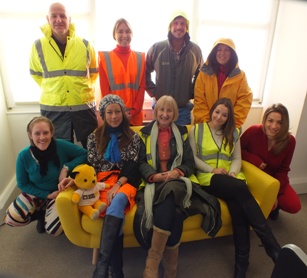
Bright Day 2019 - Friday 25th October Frossard House, Ravenscroft, Julius Baer and BDO + Raymond Falla House took part in "Bright Day" - the
day when we promote our BE SAFE BE SEEN message by asking islanders to dress up in bright clothes
and donate a sum of money. We raised over £1,000 which included a large donation from Specsavers in Market Street.
We then spent the money on purchasing hi-vis vests for adults and children. Ravenscroft staff dressed up in their brightest
clothes for the photo which was in the Guernsey Press.
Bright Day 2018 - Friday 26th October Several companies took part in "Bright Day" - the day when we promote our BE SAFE BE SEEN message
by asking islanders to dress up in bright clothes and donate a sum of money. We then spend the proceeds on hi-vis
vests which we give out free during Road Safety Week. Guernsey's roads have limited lighting and so it is really
important that pedestrians and cyclists wear hi-vis items in order to be visible after dark. B&Q was one of the
companies who took part and we took a photo amongst their Christmas display!
Road Safety Week 2017 This year's Road Safety Week was a huge success. Funds raised through our dress down day on 20th October amounted to £734 - a record. We are really grateful to States of Guernsey staff at Frossard House, employees at Butterfield Bank, BDO, Guernsey Post and the Insurance Corporation for taking part. In addition Specsavers in Market Street donated £500 and also donated 500 hi-vis vests for children and small adults for us to give away in the OSA Recruitment Pop Up Shop in St. Peter Port during Road Safety Week. Living Streets Guernsey Local Group purchased 639 hi-vis vests which were all given away during Road Safety Week together with the 500 donated by Specsavers. We really hope that pedestrians will wear the vests to ensure that they can be seen after dark on Guernsey's narrow roads.
Living Streets takes over the Pop Up Shop for a week - Road Safety Week 2016 During Road Safety week - 21st November - Living Streets took over the OSA Recruitment Pop Up Shop in Smith Street to give away hundreds of high visibility waistcoats to members of the public to encourage them to brighten up when walking or cycling on Guernsey's roads. We opened the shop from 10am until 4pm and during the five days we talked to many islanders about the dangers of walking after dark. Most of the waistcoats went to pedestrians, cyclists and dog walkers. Specsavers in Market Street donated 500 items - the majority of which went to schools. The waistcoats were purchased from funds raised during "Bright Day" the dress down day held on 28th October. We raised £497.40 during the day and received another cheque for £100 later from Beechwood who took 130 high visibility items for their pupils. Living Streets also put some of its money towards the hi-vis items. Throughout the week we also sold some of our merchandise - our 2017 calendars, Christmas cards and Guernsey Country Walks greeting cards. Many islanders gave us donations. Altogether we made £361 on the sale of our merchandise and £102.74 in donations. We are most grateful to Jackie Tebbutt, Ann Robilliard and Tom Le Pelley for helping to man the shop during the week. Also to Sarah Burchett from Specsavers for their generosity in providing so many hi-vis items, and to Belinda Windsor from OSA Recruitment for their generosity in allowing us to occupy their Pop Up Shop for the third year running.
Bright Day - October 28th 2016 Our dress down day
"Bright Day" aims to highlight the dangers of walking and cycling on Guernsey's roads after dark. With
very little street lighting it can be very dangerous unless you are wearing light or preferably high visibility clothing.
Those who take part in the dress down day get first choice at acquiring hi-vis gear for themselves and their children. As usual, staff at Frossard House and Bulwer Avenue raised the most funds for us. The Education Department
in the Grange also took part and so did Investec. BDO very kindly gave us a generous cheque even though they weren't
able to take part. Altogether we raised £497.40. This will be spent on purchasing hi-vis waistcoats
for adults and children which will be given out during Road Safety Week (21st November) in the Pop Up Shop in Smith Street. This year Specsavers has very kindly given us 500 items to add to our stock and Living Streets will be putting £400 towards
more items so that we can help as many people as possible.
Road Safety Week 2015 - we encourage islanders to brighten up Bright Day” is the dress down day we organise each year in order to emphasise the BE SAFE BE SEEN message. This year it was held on 30th October—so just before the clocks go back. Guernsey’s narrow roads and lack of street lighting can be very challenging—particularly on a dark rainy night. We encourage pedestrians and cyclists to brighten up at night—preferably by wearing a high visibility vest over their coat. All the funds collected during “Bright Day” go towards purchasing hi-vis vests which we then give out free to islanders. This year’s event was a bit disappointing. 9 companies pledged to take part when we contacted them earlier in the year. However, only 3 of those eventually took part. We are most grateful to the States Departments who, as usual, raised the majority of the money. Also to Guernsey Post and to Clegg Gifford. We raised £396.
Living Streets takes over the OSA Recruitment Pop
Up Shop
We are
most grateful to OSA Recruitment for allowing us to occupy their Pop Up shop in Smith Street during Road Safety Week.
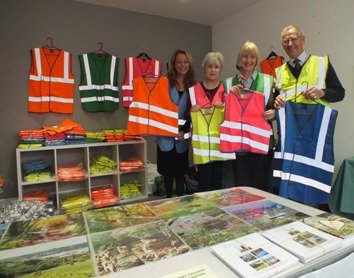
It is a fantastic way of raising our profile and spreading the BE SAFE BE SEEN message. We spent £907.75 on the purchase
of high visibility vests — investing some of our own funds to make sure we had sufficient to meet the demand from islanders. We gave first choice of items to employees
who took part in “Bright Day” and also to schools. Amherst received 25 vests
for pupils who had just passed their cycle proficiency test and Le Murier received 9 vests for pupils who walk for their Duke
of Edinburgh practice. Normally we only offer yellow, orange or pink vests but we decided to extend the colour range adding pale blue, royal
blue and green. It is always difficult to gauge demand and the new colours ran out very quickly. We are most grateful
to Sarah Burchett at Specsavers who donated well over 100 small adult vests. Very many thanks also to Tom, Jackie
Tebbutt, Maureen Pitman, Sheila Cataroche, Judith Le Tissier and Ann Robilliard for their help manning the shop during the
week. We are also very grateful to Creaseys for lending us a mannequin for the week and the Red Cross shop for lending
us some clothes to dress the mannequin! As well as our BE SAFE BE SEEN message we had leaflets on “Safe walking
in Guernsey” and “iPod Oblivion” plus some of our Walk to Work leaflets. We also encouraged islanders to
talk about any pedestrian safety concerns. During the week we sold a good quantity of our merchandise—our 2016
calendars, Christmas cards and greeting cards. We sold 103 of our greeting cards, 34 calendars and 115 Christmas cards taking
a total of £318. In addition we received £288.51 in donations.
Road Safety Week 2014 - 17th to 23rd November The UK Road Safety Charity BRAKE sets a theme each year. In 2014 they were asking everyone to "look out for each other" on the roads. They were also calling for everyone to put safety first and be considerate to one another, encouraging people on foot and bike to never take chances, and make sure they can be seen. Living Streets Guernsey LBG decided to run a "Bright Day" on 24th October so that all the funds collected could be used for buying high visibility waistcoats which could be given out free during the week itself. OSA Recruitment very kindly gave Living Streets the use of their Pop Up Shop in Town for the week and we gave out more than 600 high visibility waistcoats during the week. We also sold a considerable amount of our merchandise - Guernsey Country Walks calendars for 2015, Christmas cards and greeting cards. We worked closely with the Environment Department's new Active Travel Unit and the Guernsey Police during the week who also promoted the BE SAFE BE SEEN message. We are most grateful to everyone who came in to the Pop Up Shop to say hello and we are hoping that we will see many more islanders brightening up at night to keep themselves safe on our narrow dark roads.
We raised £518 during Bright Day thanks to the generosity of the States of Guernsey departments at Frossard House and Bulwer Avenue, and businesses BDO and ICCI. The demand for high visibility items was so great that we had to buy in three more consignments throughout the week to cope with the demand. We would like to thank Living Streets Guernsey members who gave up their time to help us man the Pop Up Shop in Town. We will be doing it all again next year thanks to the generosity of OSA Recruitment who have confirmed that we can have the shop again next year during Road Safety Week - 23rd November.
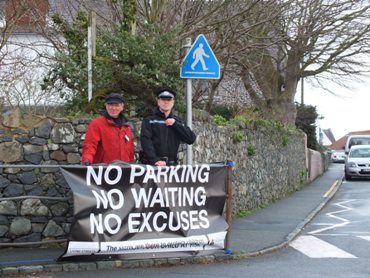
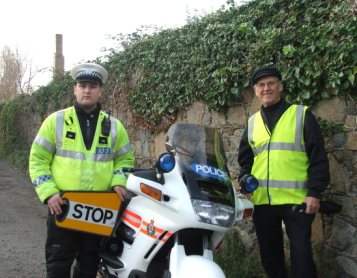
Living Streets and Guernsey Police raise awareness of
safety around schools Living Streets has joined up with the Neighbourhood Policing Team
to encourage parents to be more considerate when parking near schools. Living Streets has paid for two new banners with
a clear message: NO PARKING; NO WAITING; NO EXCUSES. The banners will be moved around the island to various problem
areas. The first location is the Vale School where parents not only park on the footpath but also on yellow lines outside
the school. This makes it very dangerous for parents and children trying to walk to school. Illegal parking carries
a fine of £70 and the Police are intending to take a zero tolerance approach to those who break the law. Living Streets is also working with the Head, Gary Hind, to try to encourage more car sharing and to help the school
develop "walking buses". In addition we are intending to provide information to parents as to where they
can park safely a short walking distance from the schools. A map pinpointing where pupils live will also be used
to help with the development of a Schools Travel Plan.
Road Safety Week 2013 UK Road Safety Charity, BRAKE, chose “Tune into Road Safety” as its theme in 2013. It stressed the need for all road users to pay attention to the road and to avoid distractions. Driver distraction is a major cause of death and serious injury in the UK and the same applies in Guernsey. Living Streets, Guernsey Police and the Environment Department all worked together to highlight road safety messages during the week. Speed checks around schools, a crack down on using a mobile phone while driving and driving and parking on footpaths were some of the activities undertaken by the Police. Living Streets has always concentrated on its BE SAFE BE SEEN message during Road Safety Week. It highlights the need to wear bright or light (or preferably high visibility) clothes after dark in order to be visible to motorists, particularly on dark rainy nights. We encouraged companies to take part in the dress down day “Bright Day” and £519.72 was raised. All the funds have now been spent on high visibility waistcoats for those companies who took part in the event and also for local schools. 290 items are being distributed to six schools and four companies. We are very grateful to those who took part and, in particular, to Frossard House who raised £354.72.
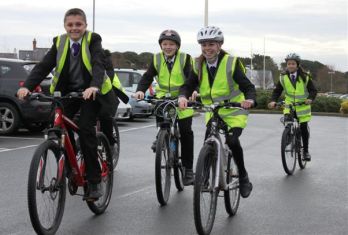
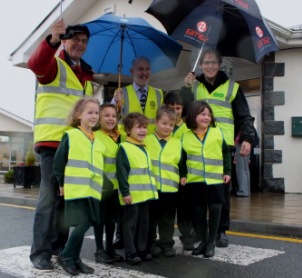
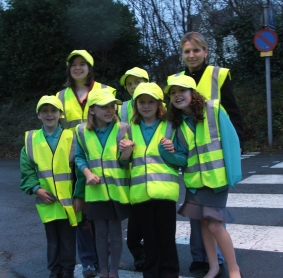
Among the schools that benefitted from hi-vis waistcoats was St. Sampson's High. 30
waistcoats were given to pupils who cycled to school and they received them in January at the beginning of the new term.
Many of the pupils were in Year 7 and they showed off their waistcoats to the Guernsey Press.
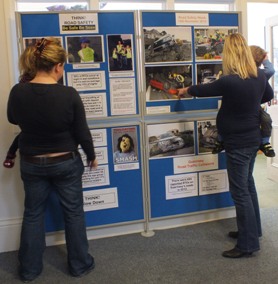
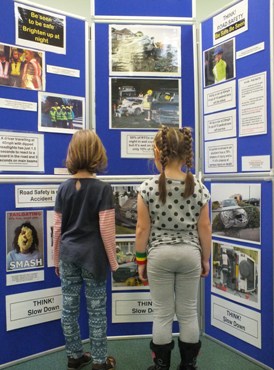
The Living Streets Road Safety Week
display was erected at the Guille-Allès Library. It showed photos of Guernsey
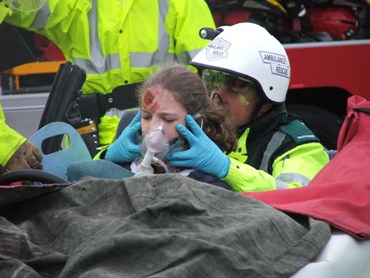
road traffic collisions, and gave information on the BE SAFE BE SEEN message with some current statistics and research findings.
Road Safety Week 2012 - 19th November Road Safety Week is organised by the UK road safety charity BRAKE. Living Streets always takes the opportunity to highlight the important BE SAFE BE SEEN message - encouraging pedestrians and cyclists to brighten up at night. Two documents - one on "Safe Walking" and the other on "Ipod Oblivion" (not walking and talking or texting with your mobile phone while trying to cross a road) have been circulated on the schools intranet so that teachers can access them.
click here to download advice on safe walking at night click here to download our iPod oblivion document
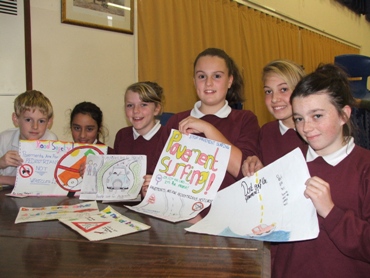
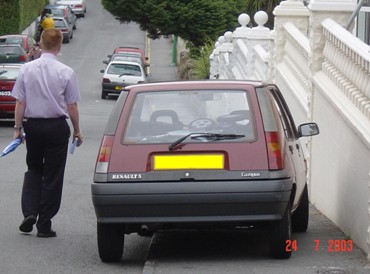
Parking on the pavement affects the most vulnerable in our society
- the elderly, children, people with disabilities, mothers with buggies and pedestrians of any age. Blocking the pavement
means that pedestrians are forced to walk unsafely in the road.
Drivers often park with two wheels on the pavement thinking that they are helping the traffic flow. However very often vehicles can't pass them anyway. Motorists think that if they leave space for one person to pass that is OK. It is not. They fail to consider a parent with a buggy and a child, a person with a doz on a lead, or a person with poor sight or in a wheelchair.
Road Safety Week is held in November each year just after the clocks have gone
back. The darker evenings mean that all road users need to take more care and look out for each other. Road Safety
Week is an initiative run by the road safety charity BRAKE. www.brake.org.uk
click here to download the What Price Road Safety? document Be Safe Be Seen when when walking after dark
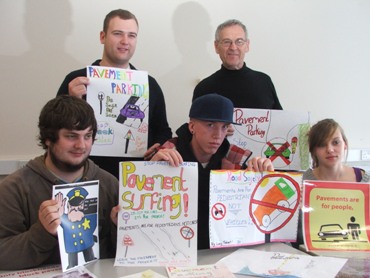
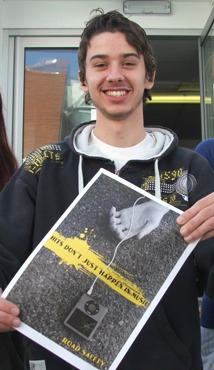
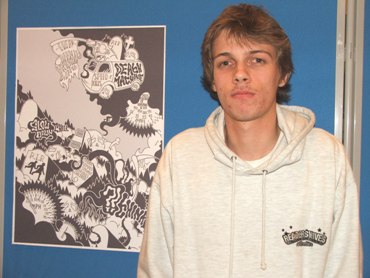
Working with students to highlight road safety issues
|
||||||||||||||||||||||||||||||||||||||
|
 Living Streets Guernsey
LBG
Association of Guernsey Charities No. 259 "Campaigning for better streets
and public spaces for people on foot"
|